AI
Nvidia and Jensen Huang Explained: Why Its Chips Power AI

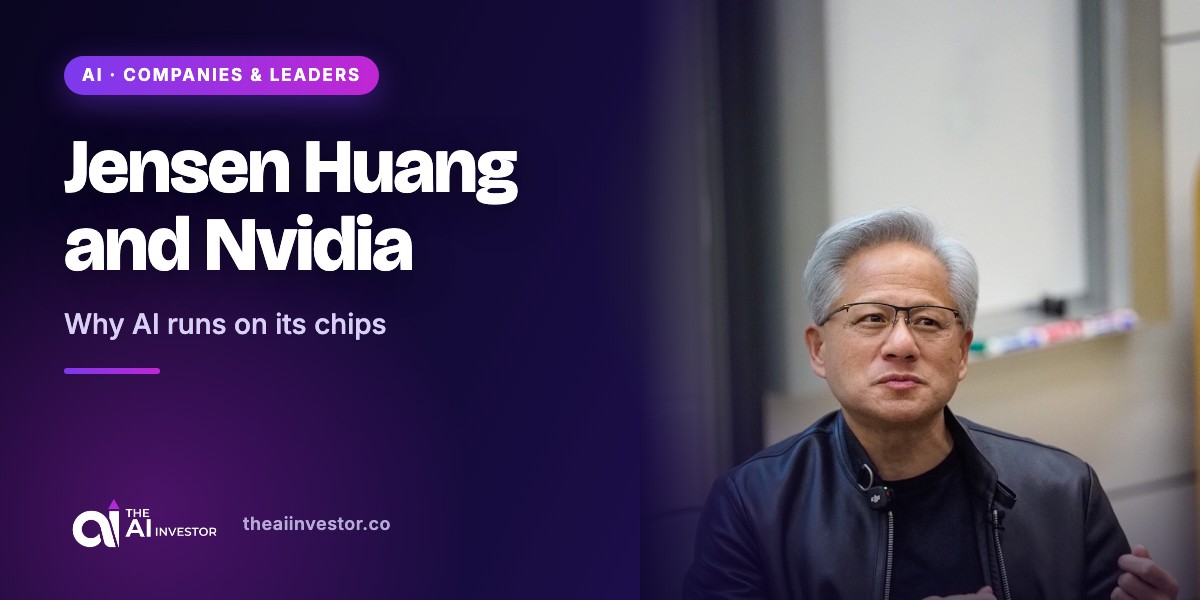
Nvidia is the US company whose graphics processing units (GPUs) became the standard hardware for training and running AI. Jensen Huang co-founded it in 1993 and is still its CEO. Nvidia is listed on the Nasdaq under NVDA, and has at times been the most valuable company in the world. Its results depend heavily on spending by cloud and AI companies, and on US export rules.
Who is Jensen Huang?
Jensen Huang is the co-founder, president and CEO of Nvidia. Born in Taiwan and raised in the US, he co-founded the company in 1993 with Chris Malachowsky and Curtis Priem. He is known for leading Nvidia from a video game chip maker to the centre of the AI boom.
What does Nvidia do?
- Designs GPUs, chips that do many calculations at once, which suits AI.
- Sells complete AI computing systems and networking equipment to data centers.
- Provides CUDA, a software platform that developers use to program its chips, which makes its ecosystem hard to leave.
- Still sells gaming graphics cards, and chips for cars and robots.
Its investor information is at investor.nvidia.com.
Why does AI need Nvidia chips?
Training a modern AI model means running enormous numbers of calculations. GPUs do this much faster than ordinary processors. Companies such as OpenAI, Anthropic, Google, Meta and Microsoft buy huge numbers of Nvidia chips, so Nvidia's sales have followed AI spending.
How does Nvidia make money?
Most revenue now comes from its data center business, where it sells AI chips and systems. Its financial year ends in late January, so results are labelled by fiscal year. Read the quarterly reports for current numbers.
What are the risks?
- Customer concentration: a few large customers account for a big share of sales.
- AI spending cycles: if customers cut back, sales could fall.
- Export controls: US rules limit sales of advanced chips to China and have affected its products there.
- Competition: AMD, and custom chips designed by its own customers.
- Valuation: expectations built into the share price can be very high.
What should an investor check?
- Revenue split by business and by customer.
- Gross margins and how they are changing.
- Commentary on supply, demand and export rules.
- How much customers are spending on AI, and whether that pace can continue.
- The share price compared with earnings and growth.

Want to learn how to use AI yourself?
Join the free 90-minute live masterclass, every Friday, 7 PM IST (India) or 7 PM ET (everywhere else).
Register for the masterclass nowImportant: This is education only and not financial or investment advice. Nvidia (NVDA) is described for education only. This is not a recommendation to buy or sell. Company facts change, so check the official sources linked here for current figures.
Image credit: Jensen Huang at Stanford (April 2026) by Anderseidesvik, CC BY-SA 4.0, via Wikimedia Commons, cropped and resized. This header image is shared under the same CC BY-SA 4.0 licence. No endorsement is implied.
Frequently asked questions
Who is Jensen Huang?
The co-founder and CEO of Nvidia, which he co-founded in 1993.
Why is Nvidia important for AI?
Its GPUs are the main hardware for training and running AI models, and its CUDA software ecosystem is widely used.
What are the main risks?
Customer concentration, swings in AI spending, export controls, competition and high expectations in the share price.
What is Nvidia's ticker?
NVDA, on the Nasdaq.
Is this financial advice?
No. This is education only.
Namya Aankur Gupta is the founder and CEO of The AI Investor, an education brand that teaches practical AI, investing and crypto skills. Featured by LinkedIn News India as a voice to follow in India. Her content is educational and is not financial advice.